
Best Portable Power Stations (2026)
Power goes out at 2 AM. The fridge stops. Your phone is nearly dead. Somewhere down the block a gas generator wakes the whole street.
Portable power stations solve that job without fuel or fumes — if you pick the right size. A lot of “best of” lists still recycle last year’s models, or rank units you cannot actually buy.
Every pick on TrailCell Lab is a current EcoFlow, Jackery, or Anker listing we can verify, with street prices checked at write time. No demo brands. No retired filler.
Quick Match: Find Your Perfect Power Station
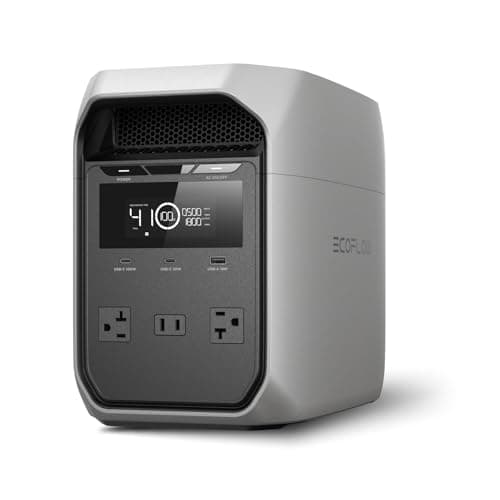 EcoFlow Delta 3 Classic
1,024Wh · 1,800W · ~$499 street
→ Complete GuideCamping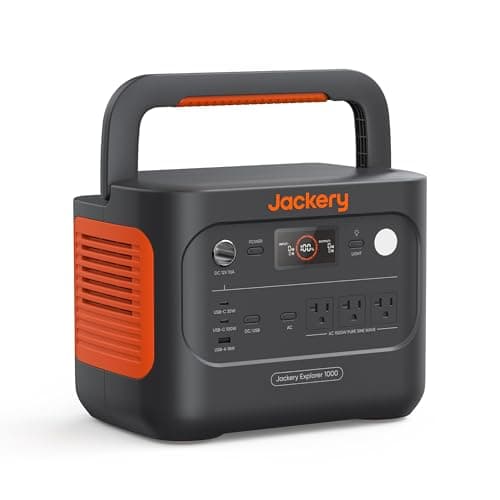 Jackery Explorer 1000 v2
1,070Wh · 1,500W · lightest common 1kWh
→ Complete GuideRV & Van Life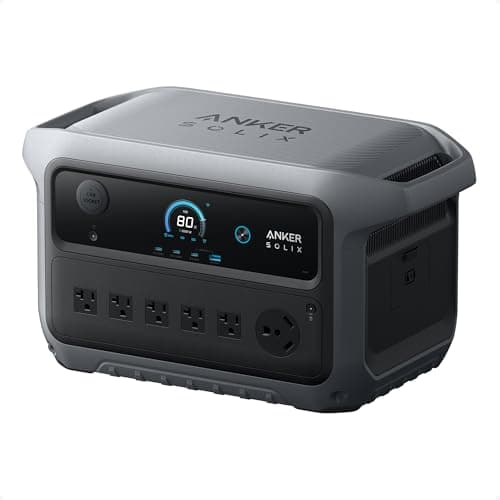 Anker SOLIX C2000 Gen 2
2,048Wh · 2,400W · LiFePO4
→ Complete GuideBudget (Under $300)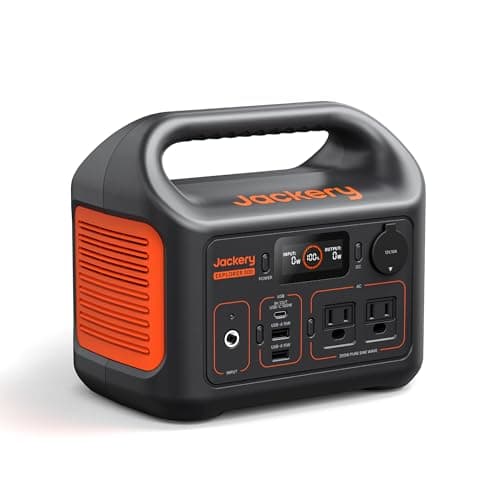 Jackery Explorer 300
292Wh · 300W · day-trip kit
→ Complete GuideNot sure which size you need?
Tell us what you need to power and for how long. Our sizing guide calculates watt-hour and output needs, then matches you to the right unit — no guesswork. Open sizing tool →
Quick Specs Comparison
| Product | Capacity | Output | Battery | Price |
|---|---|---|---|---|
| 1,056Wh-class | 1,800W+ | LiFePO4 | ~$550 | |
| 1,024Wh | 1,800W | LiFePO4 | ~$499 | |
| 1,070Wh | 1,500W | LiFePO4 | ~$559 | |
 EcoFlow DELTA 3 Plus EcoFlow DELTA 3 Plus | 1,024Wh | 1,800W | LiFePO4 | ~$719 |
 Anker SOLIX S2000 Anker SOLIX S2000 | 2,010Wh | 1,500W | LiFePO4 | ~$650 |
 Anker SOLIX C2000 Gen 2 Anker SOLIX C2000 Gen 2 | 2,048Wh | 2,400W | LiFePO4 | ~$1,000 |
 Jackery Explorer 2000 v2 Jackery Explorer 2000 v2 | 2,042Wh | 2,200W | LiFePO4 | ~$999 |
 Jackery Explorer 300 Jackery Explorer 300 | 292Wh | 300W | Li-ion | ~$289 |


Street prices from our last catalog check — re-check at checkout. Brands shown are the ones we can verify today: EcoFlow, Jackery, and Anker.
Detailed Rankings
Why It Wins
For most first-time buyers, the C1000 Gen 2 is the cleanest ~1kWh pick we can put a working buy button behind: real street price near $550, LiFePO4 chemistry, and enough continuous watts for a camp fridge or short outage. EcoFlow and Jackery sit close on paper — Anker wins the default slot because checkout and warranty story are easier to stand behind today.
What we like
- Working checkout link on a verified Anker listing
- 1kWh-class LiFePO4 with street pricing near $550
- Enough continuous watts for camping and short home outages
- Clear step up later to Anker C2000 / S2000
Trade-offs
- Confirm whether your config is expandable before you need 2kWh
- Street price moves — re-check at checkout during storm season
Best For: First portable station for camping + overnight home backup; 90% of first-time buyers
Who Should Skip: You already know you need a hard 2kWh base (jump to C2000 Gen 2 / Explorer 2000 v2)
- #2
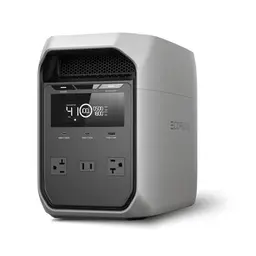
EcoFlow Delta 3 Classic
~$499 street
Specs: 1,024Wh · 1,800W AC · LiFePO4 · Amazon FBA listing in our media catalog
Why It’s #2
Delta 3 Classic is the EcoFlow we can stock today — not a recycled Delta 2 write-up. Around $499 street for 1,024Wh / 1,800W it undercuts many peers while keeping the EcoFlow app story campers already know. It sits just behind Anker mainly because the buy link is less reliable in our catalog right now.
What we like
- Sharp street price for a true 1kWh / 1,800W EcoFlow
- Familiar app ecosystem if you already own EcoFlow
- Covers weekend camping and short home outages well
Trade-offs
- Checkout link can fall back to a plain Amazon product page
- Watch bundle SKUs that inflate price for the same core Wh
Best For: EcoFlow owners and anyone hunting a strong ~$500 1kWh deal
Who Should Skip: You need the most reliable checkout path today (pick Anker) or a hard 2kWh base
- #3
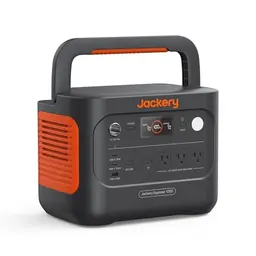
Why It’s #3
When the unit has to leave the trunk every weekend, Jackery’s Explorer 1000 v2 is still the camping default: slightly more Wh than many 1kWh peers, a quieter reputation for bedroom/CPAP use, and a weight story that beats heavier home-backup bricks. Output caps at 1,500W — fine for fridges and laptops, not for tool-heavy sites.
What we like
- 1,070Wh capacity with a true portable chassis
- Quiet, campsite-friendly reputation
- Clear upgrade ladder to Explorer 2000 v2
Trade-offs
- 1,500W continuous — less headroom than Anker/EcoFlow 1,800W class
- Pending partnership — Amazon DP until Joined
Best For: Car camping, van soft-camping, quiet overnight medical loads
Who Should Skip: You need 2,000W-class tools or Joined checkout today
- #4
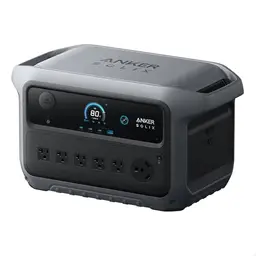
Anker SOLIX C2000 Gen 2
~$1,000 street
Specs: 2,048Wh · 2,400W · LiFePO4 · Joined affiliate link
Why It’s Here
When overnight isn’t enough — multi-day outages, fridge + freezer, or RV boondocking — jump straight to a 2kWh base. C2000 Gen 2 gives 2,048Wh and 2,400W with a Joined Anker link in our catalog. Heavier than any 1kWh pick; buy it when capacity is the brief, not trunk convenience.
What we like
- True 2kWh-class capacity with 2,400W output
- Joined PB link and live street price
- Pairs cleanly with Anker PS200 bifacial panels in the same catalog
Trade-offs
- Weight and price jump hard vs 1kWh units
- Overkill for phone/laptop weekends
Best For: 2–3 day outage prep, RV soft off-grid, serious home backup
Who Should Skip: Day trips and first trial buys — start at C1000 Gen 2
- #5
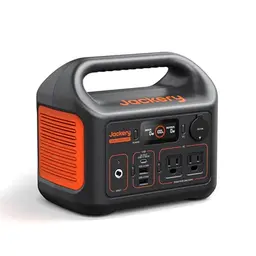
Jackery Explorer 300
~$289 street
Specs: 292Wh · 300W · day-trip / festival kit
Why It’s Here
Not everyone needs a thousand watt-hours. Explorer 300 covers phones, lights, laptops, and light USB-C loads without the bulk of a 1kWh brick. It’s the honest compact pick in our Jackery pool — not a compromised flagship.
What we like
- Real sub-$300 street price for a named Jackery
- Packable for festivals and day trips
- Clear upgrade path to Explorer 1000 v2
Trade-offs
- 300W continuous — no compressor fridge
- Not a home-backup solution
Best For: Day trips, light camping, first category buyers under $300
Who Should Skip: Anything with a compressor fridge or sustained >600W loads
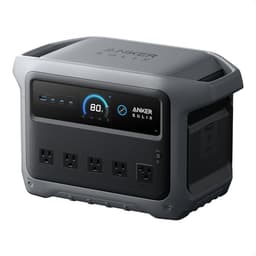
Also Worth Considering
Same three brands, different jobs — Plus trim, soft 2kWh Anker, or Jackery’s Explorer 2000 when you already live in that ecosystem.
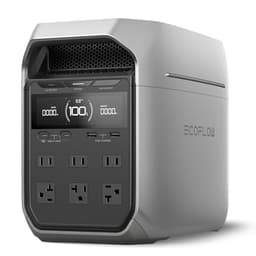
EcoFlow DELTA 3 Plus
~$719 street
Same 1,024Wh / 1,800W class as Delta 3 Classic with Plus-trim packaging. Buy it when the street gap vs Classic is small; skip duplicate Classic + Plus listings on the same page.
Best for: EcoFlow buyers who want the Plus SKU price/feature trim
Skip if: Classic already covers your Wh needs at a better street price
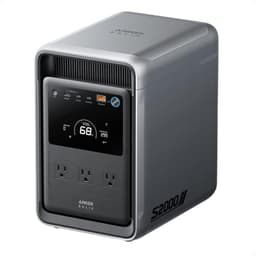
Anker SOLIX S2000
~$650 street
2,010Wh soft-camping alternative with a Joined link. Lower continuous watts than C2000 Gen 2 (1,500W) — better when Wh matters more than tool loads.
Best for: Van soft-camping and overnight hotel loads on a Joined Anker SKU
Skip if: You need 2,400W tool headroom — take C2000 Gen 2
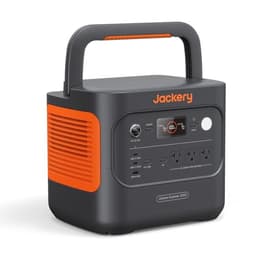
Jackery Explorer 2000 v2
~$999 street
Jackery’s 2,042Wh / 2,200W answer to Anker C2000. Strong when you already live in the Explorer ecosystem; Pending partnership means Amazon DP until Joined.
Best for: Jackery loyalists stepping into multi-day / RV capacity
Skip if: You want Joined checkout today (Anker C2000) or sub-$600 1kWh
Scene guides
Perfect For:
- Weekend campers who need reliable power without generator noise
- Home backup during outages (fridge, medical devices, communication)
- RV and van life dry camping or shore-power supplement
- Tailgaters who want TV / blender conveniences without idling a vehicle
- Emergency prep for hurricanes, ice storms, grid failures
Not Ideal For:
- Whole-home backup expectations without a large expandable system
- Running central AC, electric heat, or well pumps continuously
- Extended off-grid living without solar supplementation
- All-day contractor tools (gas still wins)
FAQ
Can a portable power station run my refrigerator?
Yes. A full-size fridge (150–200W) runs roughly 10–15 hours on a 1,000Wh unit based on rated capacity. Let it run continuously — power-cycling wastes energy and risks food spoilage.
How long do these actually last?
Battery lifespan: 3,000–6,000 cycles ≈ 8–15 years of regular use on LiFePO4 chemistry. These aren’t phone batteries.
Are they safe indoors?
Yes. No exhaust, no carbon monoxide, no fuel fumes. Keep vents clear and use LiFePO4 units for home backup whenever possible.
Can I run a space heater?
Maybe. Most space heaters are 1,500W. You need 1,800W+ output and accept ~1 hour runtime per 1,000Wh. Better strategy: electric blanket (~50W) runs 15+ hours.
How do I know what size I need?
Step 1: List devices. Step 2: Look up wattage. Step 3: Add them up, ×1.2 for safety. Example: fridge 150W + router 10W + laptop 65W = 225W × 1.2 = 270W → 1,000Wh minimum for several hours of headroom. Or use our sizing tool.
What’s the difference between 1kWh and 2kWh?
Runtime. A 1kWh unit (Delta 3 Classic / C1000 Gen 2 / Explorer 1000 v2) runs a fridge ~10–15 hours; 2kWh (C2000 Gen 2 / Explorer 2000 v2 / S2000) roughly doubles that. For outages longer than overnight, step up. For camping weekends and short outages, 1kWh is usually enough.
Why no Bluetti / Zendure / Fossibot on this page?
Our PartnerBoost test media catalog currently returns EcoFlow, Jackery, and Anker for portable power. We only rank SKUs we can resolve to a live listing — no borrowed competitor screenshots.